


What Are bStocks? Tokenized Real-World Stocks on BNB Chain
Tokenized stocks are becoming one of the clearer signs that traditional finance and blockchain are starting to meet in practical ways. For many investors, buying shares has always followed a familiar route: open a brokerage account, place an order during market hours, and hold the shares within that platform.
That system remains strong. Traditional stocks offer deep liquidity, broad market choice, and shareholder rights such as voting, depending on the type of share held. But for investors already active in crypto, the model can feel limited. Shares are usually tied to brokerage accounts, market hours, and systems that do not connect easily with blockchain applications.
What Makes bStocks Different
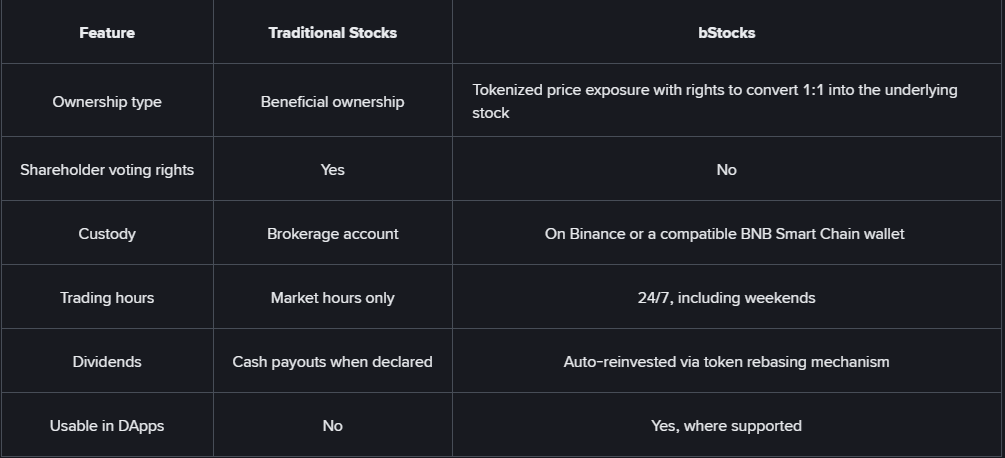
bStocks bring selected U.S.-listed equities on-chain through BEP-20 tokens on BNB Smart Chain. They give users 1:1 economic exposure to the price movement of the underlying shares, while regulated custodians hold the actual shares.
This means a bStock rises or falls in line with the share it represents. Users can trade them around the clock, withdraw them to compatible wallets, and use them with supported on-chain applications. Dividends are not paid out in the same way as traditional stocks, but are automatically reinvested through a multiplier.
The key difference is control and access. Traditional stocks remain inside a brokerage account, while bStocks give users blockchain-native utility and the option to self-custody their assets.
Two Models for Different Investors
This does not mean tokenized securities are replacing traditional stocks. The traditional market still offers wider asset choice, stronger depth, and established investor protections. It also gives shareholders rights that bStocks currently do not offer, such as voting.
Instead, bStocks represent a different route for a different type of user. They may appeal to investors who already understand crypto wallets, prefer 24/7 access, and want familiar assets to work within blockchain-based finance.
The future may not be stocks versus tokenized stocks, but both models serving different needs.


