


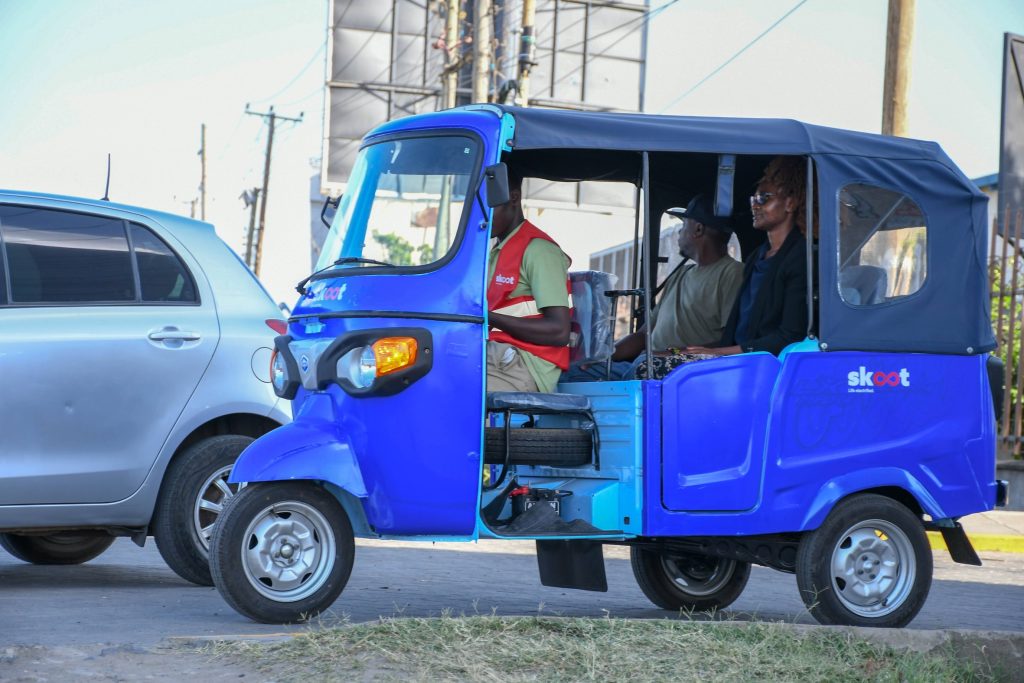
Skoot Technology has launched the Skoot e3W in Kenya. A smart electric tuk-tuk powered by SUN Mobility’s battery-swapping system and distributed by Car & General.
The launch comes as Kenya accelerates its shift toward electric transport, driven by high fuel costs, urban congestion and new climate commitments. Electric two- and three-wheelers are emerging as one of the most commercially viable entry points, especially for delivery and passenger transport operators seeking lower running costs.
The Skoot e3W combines a Piaggio-designed vehicle, supplied and serviced by Car & General, with SUN Mobility’s battery-swapping platform. Drivers can lease the vehicle and manage operations through a mobile app that tracks payments, swap station locations and delivery contracts.
Battery swaps take only a few minutes, reducing downtime compared to conventional charging. A typical driver travels around 150 kilometres per day. Their daily energy costs is estimated at about KES 650, compared with roughly KES 850 for diesel. The companies say this represents savings of up to 30%. A key selling point in a market where margins are thin and fuel price swings can quickly erode profits.
Skoot Pilot Trials Shape Local Design
Over the past two years, Skoot, SUN Mobility and Car & General conducted trials across Nairobi, including load testing, durability monitoring and rider experience pilots. The final product adapts for local traffic conditions and driver needs.
Skoot will offer the e3W on flexible leases starting from about KES 1,200 per day, including maintenance. Executives say the platform can expand beyond tuk-tuks into other connected mobility and energy solutions.
With battery-swapping infrastructure now entering the Kenyan market, the success of such models may determine how quickly electric three-wheelers scale across East Africa’s urban transport networks.


