


Genetec is urging large organizations to take a more practical view of hybrid-cloud adoption in physical security. They argue that many enterprise environments are far too complex for a one-size-fits-all approach.
The company says large businesses are balancing far more than a simple shift to cloud. Many operate across hundreds of locations. They face tough compliance and cybersecurity rules, and depend on systems that must keep running for years. In that setting, cloud decisions are often shaped as much by governance, resilience, and operational continuity as by speed or convenience.
“Enterprise physical security seldom operates within a single deployment model. Cloud strategies must reflect that reality,” said Francis Lachance, Senior Director, Product at Genetec Inc. He said many organizations continue to run cloud, on-premises, and hybrid systems at the same time, and need them to work together smoothly to maintain control and visibility.
Hybrid Cloud is A Strategic Choice
New findings from the Genetec 2026 State of Physical Security Survey suggest that hybrid-cloud is not simply a transition phase. It is a long-term design choice for many enterprises. The survey gathered input from more than 7,300 respondents.
Among enterprise respondents, 39% said scalability is a key reason for adopting hybrid-cloud environments, while 38% pointed to redundancy. The results suggest that many large organizations are prioritizing flexibility and continuity over the idea of becoming fully cloud-based.
Lachance said cloud should be seen as an operating model that can hold up under regulatory pressure, threat exposure, and changing business conditions, rather than a final destination.
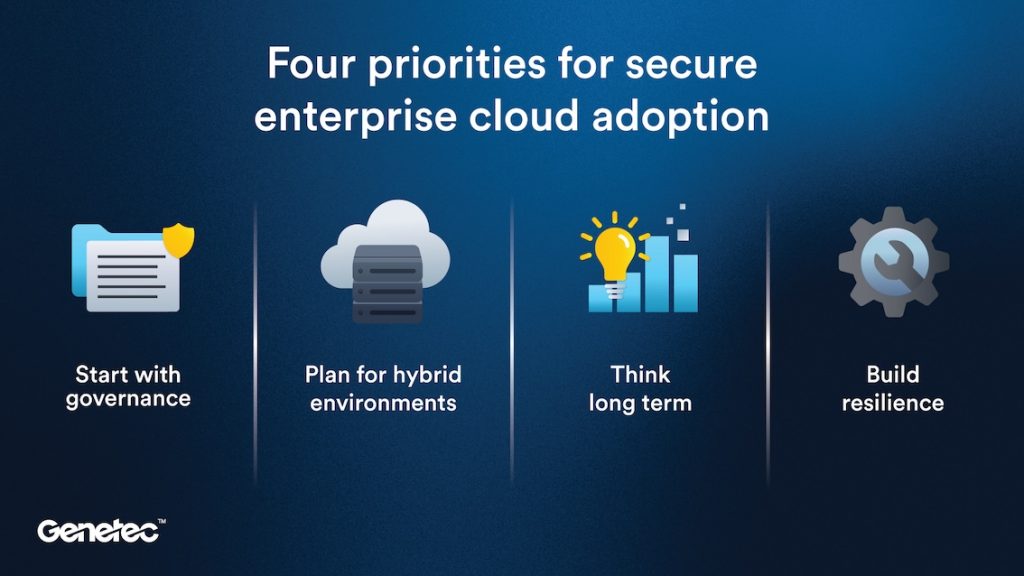
Four Priorities For Enterprise Adoption
Genetec says enterprise security leaders should focus on four areas when shaping cloud strategy: putting governance at the center of decisions, designing for hybrid environments, treating cloud as part of a wider operating model, and building for long-term resilience.
The company argues that physical security infrastructure must be able to keep working during outages, network disruptions, and other risks. For many enterprises, that means choosing systems that support continuity across cloud, on-premises, and edge environments without forcing a full move in one direction.


