


Sixteen years after its debut, Samsung Galaxy S series reflects how the smartphone itself has changed. When the first Galaxy S launched in 2010, phones were still becoming everyday tools. They were light, rounded and glossy. The early models felt smooth in the hand, almost like polished stones.
Today’s Samsung Galaxy S lineup looks very different. The latest devices are flatter, stronger and more restrained in style. The shift is not just about design taste. It mirrors deeper changes in how people use their phones: for photography, work, gaming and now AI-assisted tasks.
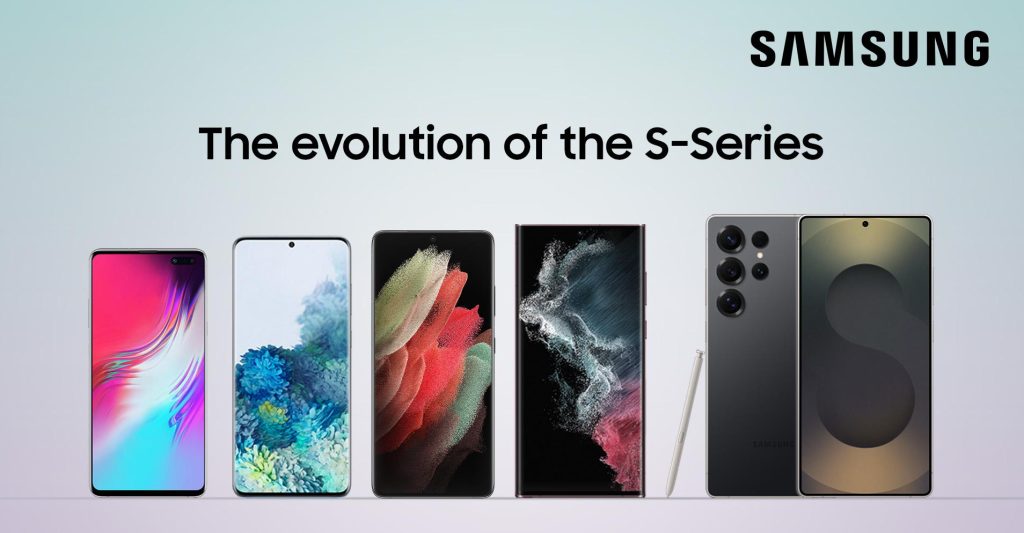
From Pebble Design to Precision Engineering
The original Samsung Galaxy S entered a market dominated by early touchscreen devices. It had a plastic body, a bright AMOLED screen and a 5MP camera that was solid for its time. Samsung quickly iterated.
By the Samsung Galaxy S6, the company moved from plastic to glass and metal. Curved edges and slimmer frames gave the phones a premium look. The camera improved sharply, adding optical image stabilisation and better low-light results.
The Samsung Galaxy S8 marked another shift. Its near bezel-less Infinity Display set a design trend that competitors followed. Screens wrapped around the edges. Devices looked futuristic. But the elegance came with trade-offs. Curved screens could trigger accidental touches and made protectors harder to apply.
By the Samsung Galaxy S22, Samsung had turned toward flat displays and boxier aluminium frames. The move improved grip and durability. It also reflected the growing size and weight of camera hardware.
Samsung Galaxy S Cameras and AI Take Centre Stage
Over time, the camera became the core selling point. Early Samsung Galaxy S 5MP shooters evolved into multi-lens systems with ultra-wide, telephoto and large main sensors. The Samsung Galaxy S20 introduced a prominent camera module to house bigger sensors and advanced zoom.
In recent years, processing power and AI have defined the experience. The Samsung Galaxy S24 and the newer Samsung Galaxy S25 refined flat designs while strengthening materials, including titanium on Ultra models. Camera systems now rely heavily on AI for colour balance, detail and low-light clarity.
These shifts show a clear pattern. As smartphones became essential tools, Samsung prioritised function over flair. Flat screens reduced user frustration. Stronger frames supported heavier camera systems. AI features aimed to make daily tasks faster and simpler.
The Samsung Galaxy S story is not one of sudden reinvention. It is one of steady adjustment. Each generation reflects feedback and new demands. From a glossy 5MP device to a titanium, AI-powered tool, the series has matured alongside the market. And if history is a guide, the next shift may already be underway.


